
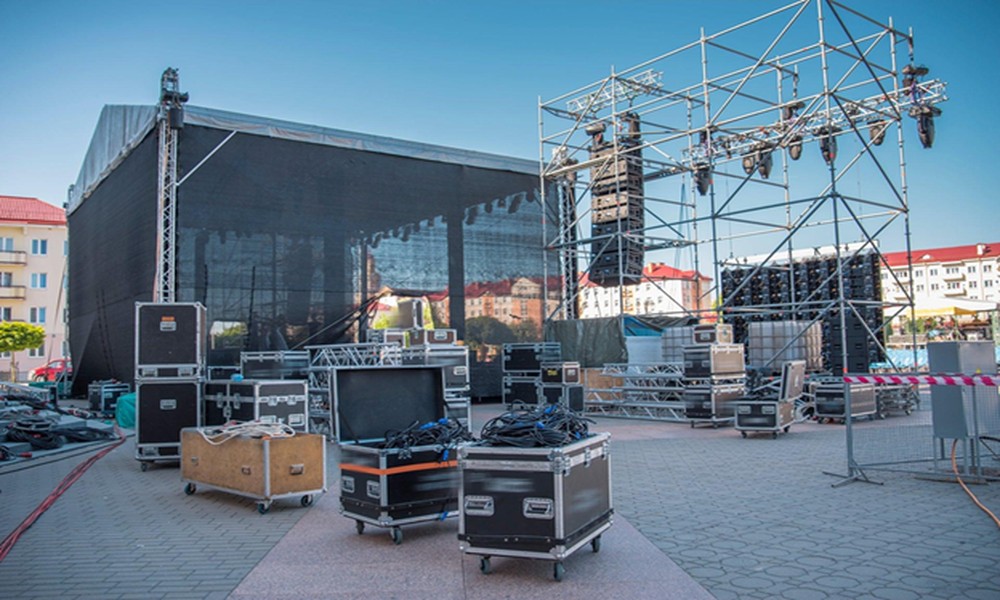
When an audience walks into a concert venue and sees a fully built stage, a perfectly tuned sound system, and a lighting rig that looks like it materialized from thin air, they are seeing the end result of weeks of planning and an exhausting day of physical and technical labor that most ticket holders never think about. The production behind a major concert is a precisely coordinated operation involving dozens of specialists working in parallel across multiple departments, each with their own timelines, priorities, and professional language. Understanding this full production workflow from the first planning call to the final truck rolling out of the parking lot is central to what a dedicated music college for live event production trains students to manage. Here is a complete breakdown of what actually happens behind the scenes.
The Advance: Weeks Before the Show
Everything begins with the advance a process of detailed coordination between the artist’s production team and the venue that happens weeks or even months before show day. The production manager, working on behalf of the artist, sends an advance document to the venue covering everything the show requires: stage dimensions, power specifications, rigging points, dressing room requirements, catering needs, crew counts, and technical riders covering audio, lighting, and video systems.
The venue’s production coordinator reviews these requirements against what the building can provide and flags any conflicts. Back-and-forth communication resolves discrepancies perhaps the venue’s house PA system meets the tour’s specifications, or perhaps the tour is carrying its own system and needs the house system bypassed entirely. Hospitality riders are reviewed and fulfilled. A local crew is hired to supplement the touring crew. Parking and load-in logistics are confirmed.
By the time show day arrives, a well-advanced production has no surprises. Every department knows exactly what they are walking into.
Load-In: The Morning of the Show
Load-in typically begins eight to twelve hours before doors open, depending on the complexity of the production. Trucks arrive at the loading dock in a specific order, usually staging first, then audio, then lighting, then video so that each department can begin work without blocking others.
The first priority is the stage itself. Carpenters and stagehands assemble the stage deck, install any custom stage extensions or thrust sections, and build the structural framework that everything else will attach to. Simultaneously, riggers work overhead climbing into the venue’s roof structure to attach motors and chain hoists that will suspend lighting and audio equipment.
As soon as the rigging is in place, the lighting department begins flying in their rig. LED fixtures, moving lights, conventional fixtures, and any specialty elements are hung, cabled, and patched to the dimmer racks and lighting console. The lighting director begins programming the show, either building cues from scratch for a one-off event or loading a pre-programmed show file from the touring rig.
The audio department runs cable sometimes miles of it on a large show from the stage to the front of house position, connecting microphones, DI boxes, monitor wedges or in-ear monitor systems, and the main PA system. On large touring productions, the PA system itself is a significant undertaking: massive line array cabinets are flown from the rigging points, subwoofers are ground-stacked or flown, and delay towers are positioned to cover areas the main hangs cannot reach.
Soundcheck: The Afternoon
With the technical systems in place, soundcheck begins typically three to four hours before doors. The process starts with a line check: the front of house engineer and the monitor engineer work through every input on the stage one by one, confirming that every microphone, instrument, and playback source is reaching the consoles correctly.
The artist’s soundcheck follows. Each performer comes to the stage and plays while the engineers dial in the mix both the front of house mix that the audience will hear and the monitor mix that the performers hear through wedges or in-ear monitors. Artist soundchecks are often where production tensions surface: a vocalist who can’t hear themselves in their monitor mix, a guitar amp that is feeding back at stage volume, a drummer whose kick drum is overwhelming the PA’s low end.
These problems get solved during soundcheck because solving them during the show is not an option.
Doors and Show Execution
When doors open, the production shifts into a different mode. The building fills with people whose presence changes the acoustic environment audience bodies absorb high frequencies and change the way the room sounds, requiring real-time adjustments from the front of house engineer. The lighting director makes final programming tweaks. Stage managers confirm show flow with artist management and communicate running order and timing to all departments.
During the show itself, the production runs on communication. The production manager or show caller often works from a headset system that connects all department heads stage manager, front of house, lighting director, video director, and spot operators in a continuous loop. Cues are called, transitions are coordinated, and any problems that arise are addressed in real time with minimal disruption to the audience experience.
The stage manager is the operational nerve center during the show managing set changes, coordinating artist movements, keeping the timeline on track, and communicating any changes to the relevant departments as they happen.
Load-Out: After the Final Note
The moment the last song ends and the house lights come up, load-out begins and it happens fast. Touring productions work on tight schedules, with trucks that need to be on the road to the next city. Every department works in reverse order from load-in: audio pulls cable, lighting brings down the rig, staging breaks down the deck.
Local crew works alongside the touring crew to move equipment from the stage to the dock and into the trucks, which are packed with military precision every case in a specific position, every piece of equipment secured for transit.
A full load-out on a major production can take anywhere from two to six hours. When the last truck door closes and the last case rolls out of the building, the venue is empty, and the production has effectively ceased to exist until it rebuilds itself in the next city tomorrow night.
The scale of coordination required to execute a major concert production is genuinely staggering. Every person on that crew from the riggers on the roof to the monitor engineer on the side of the stage to the stagehands loading trucks at midnight plays a specific, essential role in delivering an experience that the audience receives as seamless and effortless. That seamlessness is the product of expertise, preparation, and the kind of professional fluency that only comes from serious training and real-world experience.