
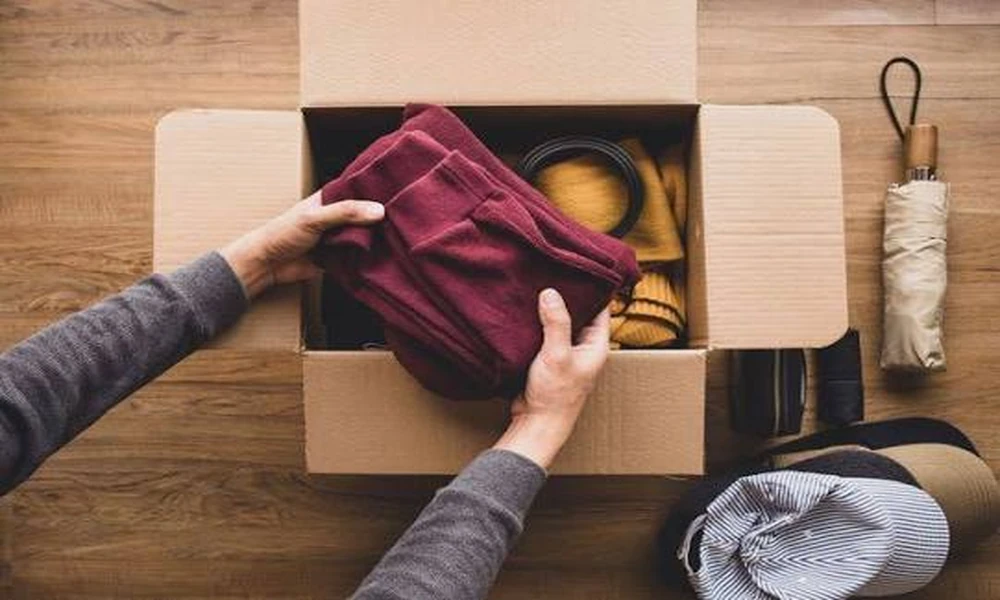
The dresser still smells like her. That’s the part nobody warns you about. The first time you open a parent’s closet after they’ve died, it’s not the paperwork that undoes you. It’s a cardigan.
Most advice jumps straight to the legal checklist. I’d rather start where you actually are, standing in a hallway with a trash bag you’re not ready to use. Here’s the plan I’d give a friend, in the order that keeps you functional.
If you’re the one making calls for a family in this spot, or a funeral home trying to serve yours better, it helps to know what modern grief recovery resources for families actually cover: the emotional work and the estate logistics, side by side, instead of treating them as two separate problems.
Don’t Sort Anything in the First Thirty Days
Give yourself a month. Maybe two. Nothing in that house expires because you haven’t opened it.
The pressure to clear a room fast is usually borrowed from someone else’s timeline, a landlord, a sibling, a realtor, your own guilt. Name the pressure out loud and it shrinks. “I’m not doing this until the fall” is a complete sentence and a valid plan.
One exception: medication, perishables, and anything that can spoil or create a hazard. Handle those now and leave the rest.
Set a decision date, not a deadline. “By mid-October I’ll spend two hours in the closet” beats “I need to get this done.” Two hours, not two days. Grief has a fuel gauge and it runs out quietly.
Use the Three-Box Method
When you do start, work in small sections. One drawer, one shelf, one jacket at a time. And use three containers plus one bag, because four bins confuse people and turn the whole thing into a sorting project instead of a goodbye.
- Keep. Items with a real job in your life or a story you’ll retell.
- Offer. Things a specific person would genuinely want. Name the person before the item goes in.
- Donate. Useful, clean, and wanted by someone. This box should be the biggest.
- Trash or recycle. Worn, stained, expired. No ceremony required.
Here’s my honest take on the keep box, and it’s the advice people push back on hardest: you don’t need to keep the whole collection to keep the person. Three shirts, one watch, and a stack of handwritten cards will do more for you over twenty years than a packed storage unit you can’t walk into without crying.
Photograph the rest before it leaves. A picture of a kitchen table costs nothing and holds the memory just fine.
Who Gets What When Nobody Left Instructions
Start with the will, if there is one. If your loved one died without a will, the state’s rules decide how property gets distributed, and that structure determines what you can hand out and what you can’t. The Social Security Administration can also tell you which family members may qualify for survivor benefits, which matters more than most people expect in the first year.
Personal property is different from titled property, and the confusion here trips up families more than anything else. Grandma’s ring is personal property. The car with your brother’s name on the title is not something you can hand to your cousin no matter how many times he calls.
Have one conversation, all the siblings, one table, and let each person name two or three things that matter to them before anyone touches a box. Pick what you’d regret losing, not what’s worth the most. Sentiment and resale value almost never line up, and honestly, the earrings your aunt is fighting over are probably worth less than the shipping.
If You’re Running a Business or Settling an Estate
Estate paperwork has a rhythm, and moving too fast creates real problems. Debts get settled before distributions. Accounts get closed in a particular order. If your loved one owned a small business, the transition involves licenses, payroll, and vendor contracts that don’t care that you’re grieving.
The U.S. Small Business Administration covers what happens to a business after an owner dies, and it’s worth reading before you sign anything. If you’re a funeral director, this is where your aftercare offering either earns trust or becomes a phone number nobody dials. The families who call back six months later tend to be the ones who got a real resource list, not a pamphlet.
Store It Properly or Don’t Store It at All
A rushed storage unit is where keepsakes go to die. Damp, heat, and stacked cardboard destroy paper and fabric faster than you’d think. The National Institute of Standards and Technology publishes guidance on preserving materials that applies surprisingly well to heirloom quilts and old letters.
Climate-controlled, dark, off the floor. Label boxes by year and person, not by room. Future you will be grateful for the labels, and future you is the one opening that box.
What to Say When Someone Offers Help
People want to do something. Let them. “Can you take the kids Thursday afternoon” works better than “let me know if you need anything,” which nobody ever acts on.
If you’re the helper, skip the advice entirely. Say the person’s name, say you remember something specific about them, and then just be in the room. Tears aren’t an emergency to fix. They’re the point.
For kids, the mistake most families make is keeping them away from the funeral. As a rule, they’re better off there, prepared ahead of time with a clear sense of what they’ll see and a person they can step outside with. Skip the surprise, keep the truth.
The First Hard Choice Isn’t the Last
You’ll make a hundred small calls over the next year. Some will feel wrong the second you make them. That’s not failure, that’s grief doing its job.
Pick one thing today: the decision date, the person who gets the call, the box you’re not opening yet. Everything else can wait until tomorrow.
What would your loved one actually want you to keep? If you already know, you’re further along than you think.