
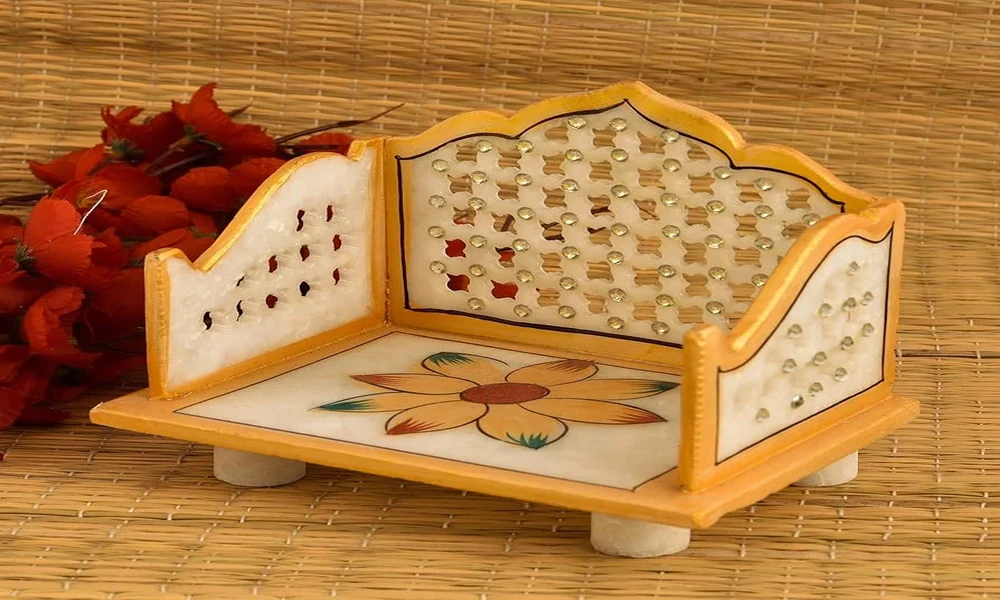
The practice of adorning the household deity with beautiful accessories that reflect devotion and aesthetic care is central to daily worship in many Hindu homes. The laddu gopal jhula, the miniature swing on which the beloved child form of Lord Krishna is seated and gently rocked during puja and festival occasions, occupies a special place among the devotional accessories that devotees collect and lovingly maintain. Understanding the different styles of jhula for laddu gopal, the materials in which decorative jhulas are crafted, and the occasions on which a jhula for god is traditionally used helps devotees select pieces that genuinely serve the worship practice and enrich the domestic shrine.
What is a laddu gopal jhula?
A laddu gopal jhula is a miniature swing, typically suspended from a frame or hook, on which the idol of Laddu Gopal, the child form of Lord Krishna, is placed during worship. The jhula symbolises the playful, beloved nature of Bal Krishna and is a central accessory in the daily rituals and seasonal celebrations that devotees of Krishna observe throughout the year. The jhula for laddu gopal is particularly significant during Janmashtami, the celebration of Lord Krishna’s birth, when elaborate decorated swings are prepared and the deity is ceremonially placed in the jhula as part of the celebration.
Laddu gopal swing accessories are available in a wide range of materials and styles reflecting the diversity of regional devotional traditions across India:
- Brass and metal jhulas: the most traditional material for deity swings, with ornate carved or embossed patterns, chains with decorative links, and finishes ranging from plain polished brass to gold-plated surfaces for formal occasions and larger household shrines
- Silver jhulas: silver pooja items including jhulas are considered among the most auspicious offerings for household deities. Silver laddu gopal swings are prized as gifts for weddings, sacred thread ceremonies, and milestone family occasions
- Wooden jhulas: intricately carved wooden swings with traditional motifs including floral patterns, peacock designs, and scenes from Krishna’s life, often finished with gold or silver paint and silk cord or chain suspension
- Decorative fabric jhulas: swing frames dressed with silk, brocade, and decorative trimming whose colour and fabric are changed according to the seasonal calendar, festival occasion, or the daily colour cycle observed in Krishna worship
What is the significance of jhula for god in Hindu worship?
The jhula for god, or deity swing, has deep roots in the devotional traditions of Vaishnavism. The image of the infant Krishna in a swing, tended by the gopis and mother Yashoda, is one of the most beloved scenes in the Bhagavata Purana, and the jhula in the household shrine recreates this scene, allowing the devotee to participate symbolically in the loving care of the Lord. Rocking the deity in the jhula during puja is a form of seva, devotional service, that expresses the devotee’s relationship with the divine as one of affectionate caretaking rather than formal reverence alone.
The decorative jhula for household worship is also chosen as an expression of the devotee’s love and aesthetic sensibility. The care given to the quality, decoration, and appropriateness of the jhula for the specific form and size of the idol reflects the importance of shodashopachara, the sixteen forms of service, in the devotional tradition.
How to choose the right jhula for laddu gopal?
Selecting a jhula for laddu gopal requires consideration of the size and weight of the idol, the style and material of the existing shrine and accessories, and the occasions for which the jhula will be used:
- Size matching: the jhula must be appropriately sized for the specific idol. A swing that is too large creates an aesthetically unbalanced arrangement; one that is too small may not safely support the idol. The idol’s height and weight should be confirmed before selecting the jhula
- Material coordination: devotees who maintain shrines with consistent material themes, such as a silver shrine or a brass shrine, typically prefer to match the jhula material to the broader shrine aesthetic
- Occasion appropriateness: certain jhulas are designed specifically for Janmashtami celebrations, with elaborate decorative elements suitable for the festival occasion, while simpler designs are more appropriate for daily worship
- Suspension compatibility: the jhula frame or hook must be compatible with the suspension point available in the shrine, whether a dedicated jhula frame, a ceiling hook, or a shelf mount
The laddu gopal jhula, jhula for krishna, and decorative jhula for household worship are devotional accessories whose beauty, craftsmanship, and appropriateness to the worship context enrich the daily and seasonal rituals of Krishna devotees. Selecting the right laddu gopal swing or jhula for god requires attention to the idol’s size, the shrine’s aesthetic, and the occasion for which the piece is intended.
Offers a curated collection of Laddu Gopal jhulas, jhulas for Laddu Gopal, jhulas for Krishna, Laddu Gopal swings, and decorative jhulas for household shrines and devotional gifting. The range spans traditional brass and silver pieces, decorative fabric swings for festival use, and a broader collection of devotional accessories that complete a loving household shrine. Also provides silver pooja items for online shopping, ideal for devotees seeking quality devotional silverware for worship and gifting occasions.