
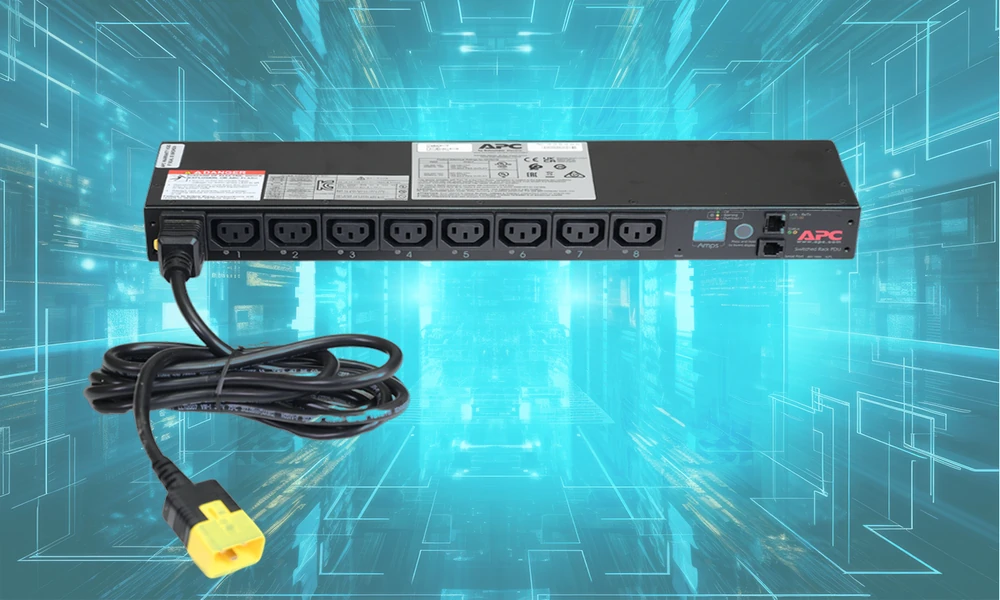
At two in the morning, a storage server in a branch office freezes. Nobody is on site, and the nearest engineer lives forty minutes away. With an intelligent power distribution unit in the rack, that engineer opens a browser at home, finds the right outlet, cycles power to the frozen machine, and goes back to bed. Without one, the fix waits until morning, or someone gets into a car.
That small story captures what these devices do. A plain power strip hands electricity to equipment and says nothing about it. A smart PDU measure the current flowing through it, reports what it sees over the network and, in many models, lets authorized staff switch individual sockets on or off from a distance. For data centers, telecom rooms and even a single office cabinet, that visibility turns guesswork about power into numbers of people can act on.
What Separates a Smart PDU from an Ordinary Rack Power Strip?
Every rack needs a PDU, the power distribution unit that takes one or two incoming supplies and splits them across many outlets mounted along the cabinet. Basic models stop there. They carry a breaker or two, a row of sockets, and perhaps a lamp that shows the supply has arrived. Reliable and simple, they suit small setups where loads rarely change, and someone walks past the equipment every day.
The intelligent version adds a small brain. A metering board samples voltage and current; a network card publishes the readings through SNMP, a web interface or similar network tools, and firmware keeps a log of events. Some designs add relays, so outlets can be switched remotely. In practical terms, a smart PDU turns the rack from a black box into something you can read like a dashboard, with each reading tied to a real outlet and a real machine.
How Do Metered and Switched Units Differ in Daily Use?
Buyers comparing one intelligent power distribution unit with another will usually meet four broad families, and the hardware inside grows with each step:
- Metered inlet: the unit shows the total load drawn by the whole strip on a small display and over the network.
- Metered outlet: every socket reports its own consumption, so you can see what each server or switch draws.
- Switched: relays let authorized users turn individual outlets or groups on and off from a remote screen.
- Switched with outlet metering: remote control and per-socket measurement come together in one housing.
Choosing between them depends on the questions you need answered. If you only want to know whether a circuit is close to its limit, inlet metering covers it. If the finance team wants to charge each department for the power its servers use, outlet metering earns its place. Remote rebooting justifies a switched power distribution unit at sites that lack hands on the ground, such as edge cabinets, retail branches and unmanned telecom shelters.
Why Does Per-Outlet Data Matter Energy Efficiency?
Power that nobody measures tends to be wasted quietly. Racks often hold forgotten servers, machines that stay switched on long after their job ended, drawing current and adding heat for the cooling plant to remove. Outlet-level readings from a smart PDU expose those machines within days, because a box that draws a steady idle load and handles no traffic is obvious on a chart once someone bothers to check.
The same data helps capacity planning. Data center teams compare the measured load with the rated capacity of each circuit before adding new equipment, which avoids both overloaded breakers and half-empty racks. Inlet readings also feed the calculation of power usage effectiveness, the ratio between total facility power and the power reaching IT equipment. An intelligent power distribution unit supplies the IT side of that ratio straight from the rack, without extra meters or manual readings.
Can Remote Switching Prevent Downtime and Overloads?
Remote switching saves site visits, and it also protects equipment during restarts. When mains power returns after an outage, dozens of power supplies switching on together can draw an inrush current large enough to trip a breaker. A switched power distribution unit can stagger the start-up, bringing outlets back one after another with a short delay between them. Alerts work in the same spirit: set a threshold, and the unit warns staff by email or message when the load creeps towards it, well before any trips.
Environmental sensors extend the idea further. Many smart PDU models accept plug-in probes for temperature, humidity or door contacts, so a cabinet that runs hot at the rear or a door left open shows up in the same software as the power readings. That single view saves the night-shift engineer from hopping between tools, and it helps facilities teams spot cooling problems while they are still small.
What Goes into Building a Dependable Intelligent PDU?
Behind the network features sit ordinary hardware, and its quality decides how long the unit lasts. Outlets, relays, circuit breakers, terminal blocks, current sensors and the metal or polymer chassis all come from electrical components manufacturers, and a weak link anywhere shows up as loose sockets, noisy readings or relays that stick. Good designs keep relays rated well above the outlet load and use outlet types that grip plug firmly, since a cord that slips out under vibration defeats every clever feature.
Every PDU, the power distribution unit your whole rack depends on, should come with clear specifications: input rating, outlet count and type, metering accuracy, supported protocols, and the safety standards it meets. Reputable makers publish these openly, along with the ratings of the relays and breakers they source from electrical components manufacturers. Ask as well how firmware updates reach the device, because anything connected to a network needs security patches over its working life, much like a laptop or a router.
How Much Monitoring Does a Small Server Rack Really Need?
A small server rack is usually well served by inlet metering, with outlet switching added once the equipment sits far from the people who look after it. That modest step already reveals how close each circuit runs to its limit and catches creeping overloads before they cause an outage. As the rack grows, an intelligent power distribution unit with per-outlet data and sensor ports gives the clearest picture of where every watt goes.